Toyota's 1995 turbo restrictor scandal: how the Celica GT-Four was caught
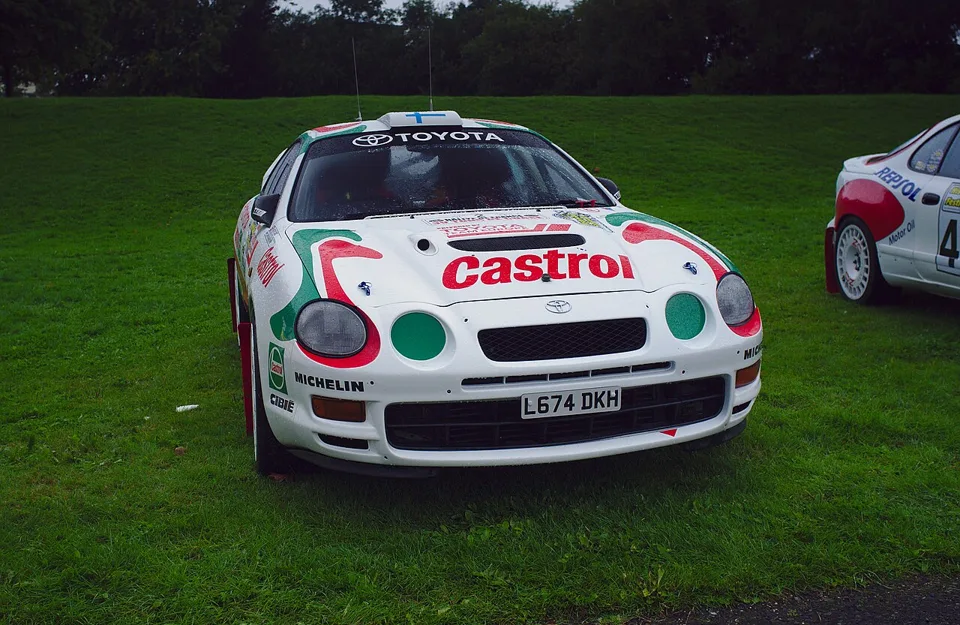

In 1995 Toyota Team Europe was one of the strongest names in rallying. By November it was suspended for a year, after inspectors found a device on its Celica that a senior FIA official called the most sophisticated he had seen in decades.
Not a wastegate: the restrictor
Retellings of this story often call it the "wastegate" scandal. The accounts we checked do not describe a wastegate. They describe the turbo air restrictor, the ring that the rules put on a turbocharged Group A engine's intake to cap the air reaching the turbo and so cap the power. A wastegate controls boost after the turbo has spun up; a restrictor limits what goes in. Toyota's trick was in the restrictor.
The car
The Celica GT-Four ST205 was Toyota's rally weapon for the mid-1990s, a turbocharged, four-wheel-drive car run by Toyota Team Europe (TTE). It won once on its debut season, in Britain at the end of 1994, and 1995 was supposed to be the year it dominated. Toyota's drivers for 1995 included Didier Auriol, Juha Kankkunen and Armin Schwarz.
How the device worked
The principle was simple even if the execution was not. When scrutineers removed the turbo to inspect it, the restrictor sat where the rules required. When the engine was running, the restrictor moved away and let in more air.
Accounts describe the mechanism differently. One, quoted by Girardo & Co, says a spring-loaded device pulled the restrictor plate back while the engine ran. Another account says the restrictor was held by dish-shaped Belleville washers, and a segmented-steel cuff on the intake hose, once clamped on, pushed them to slide the restrictor roughly 5 mm. The extra airflow is put at up to 25 percent, worth around 50 hp (37 kW) on a car making about 300 hp (224 kW). Treat the numbers as reported rather than measured.
How it was found
Toyota was caught at Rally Catalunya in October 1995, the penultimate round of the season, when an FIA commissioner found the device on Auriol's Celica. How the FIA came to look is still debated. Some accounts suspect a tip-off, and Girardo calls the detection one of the sport's biggest mysteries. None of this is confirmed.
Max Mosley, then FIA president, is quoted as calling it the most sophisticated device he had seen in 30 years of motor sport.
The punishment
On 3 November 1995 an extraordinary meeting of the World Motor Sport Council excluded TTE from that year's World Rally Championship and suspended it from competition for 12 months, as reported by RallySport Magazine. Toyota and its drivers lost their points. Some outlets describe the ban as running into 1996 and 1997; the 12-month version is the best supported. Toyota continued to support the ST205 through other teams in selected events afterwards, and its works return came later with the Corolla WRC.
Who knew?
Toyota said its management knew nothing. Co-driver Nicky Grist later recalled that the drivers, and probably team principal Ove Andersson, were unaware. That is a recollection, not a finding, and nobody has produced evidence either way.
Sources
- RallySport Magazine: Memories of Toyota's darkest hour in the WRC
- Girardo & Co: Toyota banned from WRC for cheating
- Goodwood: Dan Trent, Ultimate Rallying
- Wikipedia: Toyota Team Europe
- CarBuzz: Toyota's turbo bypass system
Figures and mechanisms vary between sources. We have flagged where they disagree. Spotted an error? Tell us.
Frequently asked questions
Was it a wastegate or a restrictor?
A restrictor. The story is often told as a wastegate or turbo trick, but accounts of the 1995 Toyota Celica GT-Four scandal describe a modified air restrictor on the turbo inlet that moved to let more air in while the car was running. The turbo is the part it fed.
Which rally did Toyota get caught at?
Rally Catalunya in Spain, the penultimate round of the 1995 World Rally Championship. An FIA scrutineer found the device on Didier Auriol's Celica ST205.
What was Toyota's punishment?
At an extraordinary meeting on 3 November 1995 the FIA World Motor Sport Council excluded Toyota Team Europe from the 1995 championship, stripped its points and suspended it from the sport for 12 months.
How much extra power did the device give?
Around 50 hp (37 kW) on a car making roughly 300 hp (224 kW), according to several accounts. That figure is widely repeated and has never been independently verified.