Pickup
Ford Ranger specifications
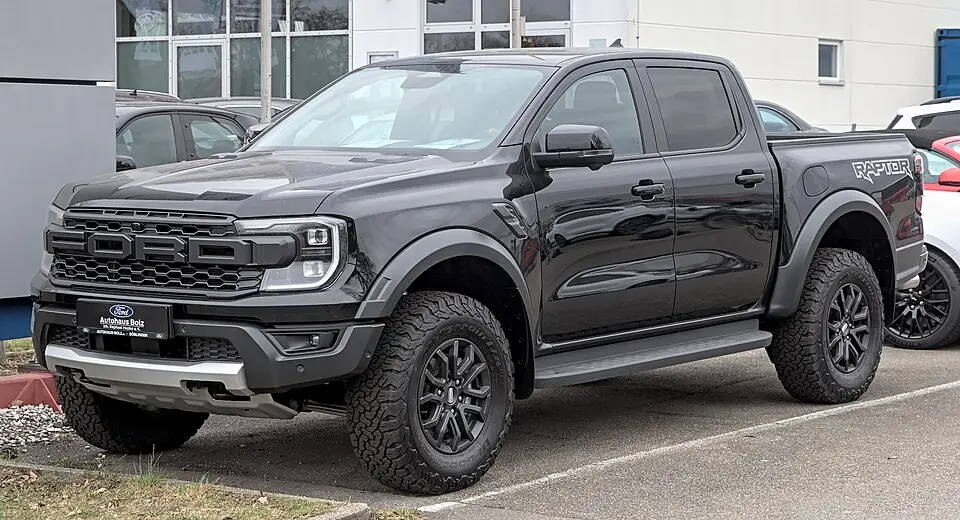
The Ford Ranger is a pickup built by Ford Motor Company. European buyers can choose from 8 engine and power combinations, from 168 hp (125 kW) to 288 hp (215 kW). US versions are rated at 17–23 mpg combined. It measures 5,370 mm (211 in) long on a 3,270 mm wheelbase.
- How much horsepower does the Ford Ranger have?
- The most powerful Ford Ranger sold in Europe produces 288 hp (215 kW) from a 3-litre petrol engine. The least powerful version makes 168 hp (125 kW).
- How big is the Ford Ranger?
- It is 5,370 mm (211 in) long, 1,918 mm (76 in) wide and 1,884 mm (74 in) tall. A typical kerb weight is 1,789 kg (3,944 lb).
- What fuel economy does the Ford Ranger get?
- The most economical European version uses 3.7 l/100 km on the WLTP cycle. In the US, EPA combined ratings range from 17–23 mpg.

- 168–288 hp
- Power (125–215 kW)
- 350–600 Nm
- Torque (258–443 lb-ft)
- 7.9–11.6 s
- 0–100 km/h (fastest to slowest version)
- 8
- Engines sold in Europe
Engines and performance
| Engine | Fuel | Power | Economy | CO₂ | Weight |
|---|---|---|---|---|---|
| 2.0 litre (commercial) | Diesel | 168 hp (125 kW) | 8.7 l/100 km (27 mpg) | 226 g/km | 1,911–3,220 kg |
| 2.3 litre (commercial) | Petrol hybrid | 185 hp (138 kW) | 3.7 l/100 km (64 mpg) | 83 g/km | 2,529–2,793 kg |
| 2.0 litre (commercial) | Diesel | 201 hp (150 kW) | 9.1 l/100 km (26 mpg) | 239 g/km | 2,230–2,750 kg |
| 2.0 litre (commercial) | Diesel | 202 hp (151 kW) | 9.4 l/100 km (25 mpg) | 246 g/km | 2,228–2,507 kg |
| 2.0 litre (commercial) | Diesel | 207 hp (154 kW) | 10.6 l/100 km (22 mpg) | 277 g/km | 2,497–2,759 kg |
| 2.0 litre (commercial) | Diesel | 208 hp (155 kW) | 10.6 l/100 km (22 mpg) | 278 g/km | 2,488–2,650 kg |
| 3.0 litre (commercial) | Diesel | 237 hp (177 kW) | 10.2 l/100 km (23 mpg) | 268 g/km | 2,283–3,350 kg |
| 3.0 litre (commercial) | Petrol | 288 hp (215 kW) | 13.8 l/100 km (17 mpg) | 315 g/km | 2,474–3,350 kg |
US powertrains and fuel economy
| Powertrain | Drive | Combined | Electric range |
|---|---|---|---|
| 2.3 litre 4-cylinder, petrol | Part-time 4-Wheel Drive, Rear-Wheel Drive | 21–23 mpg | — |
| 3.0 litre 6-cylinder, petrol | Part-time 4-Wheel Drive | 17 mpg | — |
| 2.7 litre 6-cylinder, petrol | Part-time 4-Wheel Drive | 20 mpg | — |
Versions and performance
T6.2, 2022–present: 36 versions (pickup), from least to most powerful. Figures are manufacturer claims and vary by market.
| Version | Engine | Power | Torque | 0–100 km/h | Top speed | Gearbox | Drive |
|---|---|---|---|---|---|---|---|
| 2.0 D MT RWD Pickup Single cabin Single Cab | 2.0 litre diesel | 148 hp (110 kW) | 350 Nm | — | — | Manual, 5-speed | Rear wheel drive |
| 2.0 MT Pickup Double cabin Double Cab | 2.0 litre diesel | 148 hp (110 kW) | 350 Nm | — | — | Manual, 5-speed | Rear wheel drive |
| 2.0 MT Pickup One-and-a-half cabin Open Cab | 2.0 litre diesel | 148 hp (110 kW) | 350 Nm | — | — | Manual, 5-speed | Rear wheel drive |
| 2.0 AT Pickup Double cabin Double Cab | 2.0 litre diesel | 168 hp (125 kW) | 405 Nm | — | — | Automatic, 6-speed | Rear wheel drive |
| 2.0 AT Pickup One-and-a-half cabin Open Cab | 2.0 litre diesel | 168 hp (125 kW) | 405 Nm | — | — | Automatic, 6-speed | Rear wheel drive |
| 2.0 AT 4WD Pickup Double cabin Double Cab | 2.0 litre diesel | 168 hp (125 kW) | 405 Nm | — | — | Automatic, 6-speed | All wheel drive |
| 2.0 D AT AWD Pickup Double cabin Double Cab | 2.0 litre diesel | 168 hp (125 kW) | 405 Nm | — | — | Automatic, 6-speed | All wheel drive |
| 2.0 D MT AWD Pickup Single cabin Single Cab | 2.0 litre diesel | 168 hp (125 kW) | 405 Nm | — | — | Manual, 6-speed | All wheel drive |
| 2.0 MT Pickup Double cabin Double Cab | 2.0 litre diesel | 168 hp (125 kW) | 405 Nm | — | — | Manual, 6-speed | Rear wheel drive |
| 2.0 MT Pickup One-and-a-half cabin Open Cab | 2.0 litre diesel | 168 hp (125 kW) | 405 Nm | — | — | Manual, 6-speed | Rear wheel drive |
| 2.0 MT 4WD Pickup Double cabin Double Cab | 2.0 litre diesel | 168 hp (125 kW) | 405 Nm | 11.6 s | 180 km/h | Manual, 6-speed | All wheel drive |
| 2.0 MT 4WD Pickup One-and-a-half cabin Open Cab | 2.0 litre diesel | 168 hp (125 kW) | 405 Nm | — | — | Manual, 6-speed | All wheel drive |
| 2.3 AT Pickup Double cabin Double Cab | 2.3 litre diesel | 181 hp (135 kW) | 470 Nm | — | — | Automatic, 8-speed | Rear wheel drive |
| 2.3 AT 4WD Pickup Double cabin Double Cab | 2.3 litre diesel | 184 hp (137 kW) | 470 Nm | — | — | Automatic, 8-speed | All wheel drive |
| 2.3 MT 4WD Pickup Double cabin Double Cab | 2.3 litre diesel | 184 hp (137 kW) | 470 Nm | — | — | Manual, 6-speed | All wheel drive |
| 2.0 AT Pickup Double cabin Double Cab | 2.0 litre diesel | 208 hp (155 kW) | 500 Nm | — | — | Automatic, 10-speed | Rear wheel drive |
| 2.0 AT 4WD Pickup Double cabin Double Cab | 2.0 litre diesel | 208 hp (155 kW) | 500 Nm | — | 180 km/h | Automatic, 10-speed | All wheel drive |
| 2.0 D AT AWD Pickup Double cabin Double Cab | 2.0 litre diesel | 208 hp (155 kW) | 500 Nm | — | — | Automatic, 10-speed | All wheel drive |
| 2.3 AT 4WD Pickup Double cabin Double Cab | 2.3 litre gasoline | 252 hp (188 kW) | 450 Nm | — | — | Automatic, 8-speed | All wheel drive |
| 2.3 MT 4WD Pickup Double cabin Double Cab | 2.3 litre gasoline | 252 hp (188 kW) | 450 Nm | — | — | Manual, 6-speed | All wheel drive |
| 3.0 AT 4WD Pickup Double cabin Double Cab | 3.0 litre gasoline | 282 hp (210 kW) | 491 Nm | 7.9 s | 180 km/h | Automatic, 10-speed | full |
| 3.0 AT 4WD Pickup Double cabin Double Cab | 3.0 litre gasoline | 288 hp (215 kW) | 491 Nm | 7.9 s | 180 km/h | Automatic, 10-speed | All wheel drive |
| 2.3 AT Pickup Double cabin Double Cab | 2.3 litre gasoline | 298 hp (222 kW) | 452 Nm | — | — | Automatic, 10-speed | Rear wheel drive |
| 2.3 AT 4WD Pickup Double cabin Double Cab | 2.3 litre gasoline | 298 hp (222 kW) | 452 Nm | — | — | Automatic, 10-speed | All wheel drive |
| 2.7 AT Pickup Double cabin Double Cab | 2.7 litre gasoline | 315 hp (235 kW) | 542 Nm | — | — | Automatic, 10-speed | Rear wheel drive |
| 2.7 AT 4WD Pickup Double cabin Double Cab | 2.7 litre gasoline | 315 hp (235 kW) | 542 Nm | — | — | Automatic, 10-speed | All wheel drive |
| 3.0 AT 4WD Pickup Double cabin Double Cab | 3.0 litre gasoline | 392 hp (292 kW) | 583 Nm | — | — | Automatic, 10-speed | All wheel drive |
| 2.0 D MT AWD Pickup Double cabin Double Cab | — | — | — | — | — | — | — |
| 2.3 AT Pickup Double cabin Double Cab | 2.3 litre gasoline | — | 420 Nm | — | — | Automatic, 10-speed | Rear wheel drive |
| 2.3 AT 4WD Pickup Double cabin Double Cab | 2.3 litre gasoline | — | 420 Nm | — | — | Automatic, 10-speed | All wheel drive |
| 2.3 AT AWD Pickup Double cabin Double Cab | — | — | — | — | — | — | — |
| 2.3 AT AWD Pickup Double cabin Double Cab | — | — | — | — | — | — | — |
| 2.3 AT RWD Pickup Double cabin Double Cab | — | — | — | — | — | — | — |
| 2.3 D AT AWD Pickup Double cabin Double Cab | — | — | — | — | — | — | — |
| 2.3 MT RWD Pickup Double cabin Double Cab | — | — | — | — | — | — | — |
| 3.0 AT 4WD Pickup Double cabin Double Cab | 3.0 litre diesel | — | 600 Nm | 8.7 s | 180 km/h | Automatic, 10-speed | All wheel drive |
Dimensions and weight
Full Ford Ranger dimensions, with a size comparison to rivals →
| Length | 5,370 mm | 211 in |
|---|---|---|
| Width | 1,918 mm | 76 in |
| Height | 1,884 mm | 74 in |
| Wheelbase | 3,270 mm | 129 in |
| Ground clearance | 235 mm | 9 in |
| Kerb weight | 1,789–2,520 kg | 3,944–5,556 lb |
| Boot space | 1,232 litres | 43 cu ft |
| Seats | 5 | |
| Fuel tank | 80 litres | 21 US gal |
Where it's sold, and what it's called
| Market | Sold as | 2025 sales rank |
|---|---|---|
| South Africa | Ford Ranger | ≈ #2 |
Approximate 2025 ranking from monthly NAAMSA sales reports.
Generations
Every version of each generation, with power, torque and performance figures. See the Ford Ranger generations table.
- 1st generation 1983–1988
- 1st generation, facelift 1989–1992
- 2nd generation 1993–1997
- 3rd generation 1997–2012
- 1st generation 1998–2006
- 2nd generation 2006–2009
- 3rd generation, facelift 2009–2011
- 2nd generation, facelift 2009–2011
- T6 2011–2015
- 4th generation, facelift 2015–2022
- T6, facelift 2015–2019
- T6, second facelift 2018–2022
- T6.2 2022–present
Questions about the Ford Ranger
How much horsepower does the Ford Ranger have?
The most powerful Ford Ranger sold in Europe produces 288 hp (215 kW) from a 3-litre petrol engine. The least powerful version makes 168 hp (125 kW).
How much torque does the Ford Ranger have?
Between 350 and 600 Nm (258–443 lb-ft) for the T6.2, depending on the engine.
How fast is the Ford Ranger from 0 to 100 km/h (0–60 mph)?
The quickest version takes 7.9 seconds from 0 to 100 km/h (about 7.5 s to 60 mph); the slowest takes 11.6 seconds.
What is the top speed of the Ford Ranger?
Up to 180 km/h (112 mph) for the fastest version.
How big is the Ford Ranger?
It is 5,370 mm (211 in) long, 1,918 mm (76 in) wide and 1,884 mm (74 in) tall. A typical kerb weight is 1,789 kg (3,944 lb).
What fuel economy does the Ford Ranger get?
The most economical European version uses 3.7 l/100 km on the WLTP cycle. In the US, EPA combined ratings range from 17–23 mpg.
Is the Ford Ranger a best seller?
It ranked around number 2 in South Africa in 2025.
Compare the Ford Ranger
Similar pickups and bakkies
Sources: EEA CO₂ monitoring 2025 (engines), RDW open data and manufacturer data (dimensions, versions), FuelEconomy.gov (US ratings), Wikidata Q5467909, Wikipedia. Figures are typical values and vary by trim and year. Data last updated .