
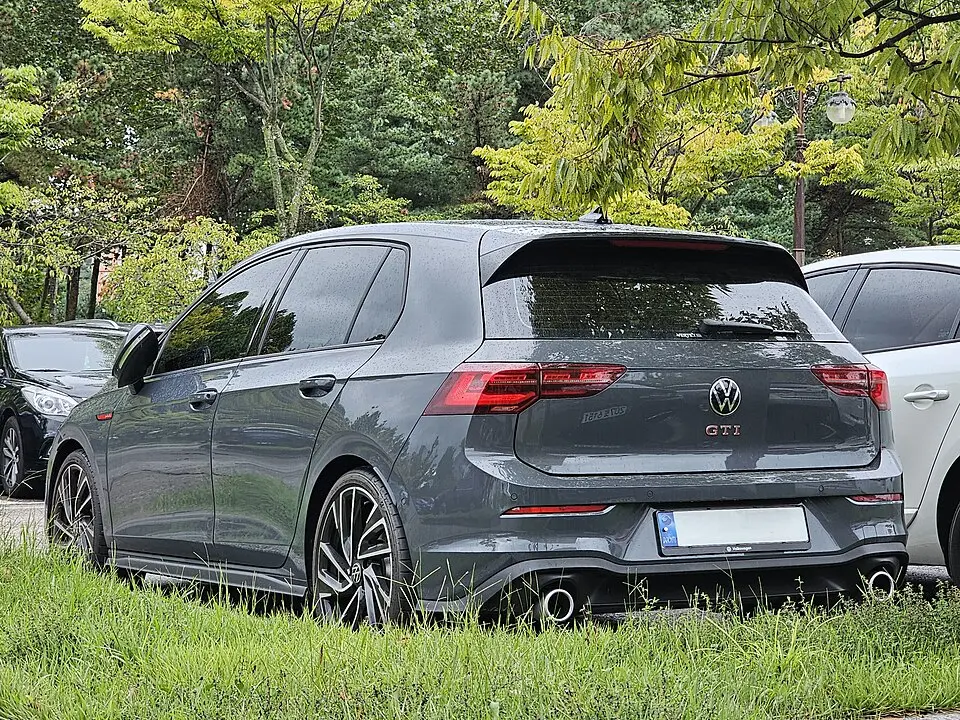
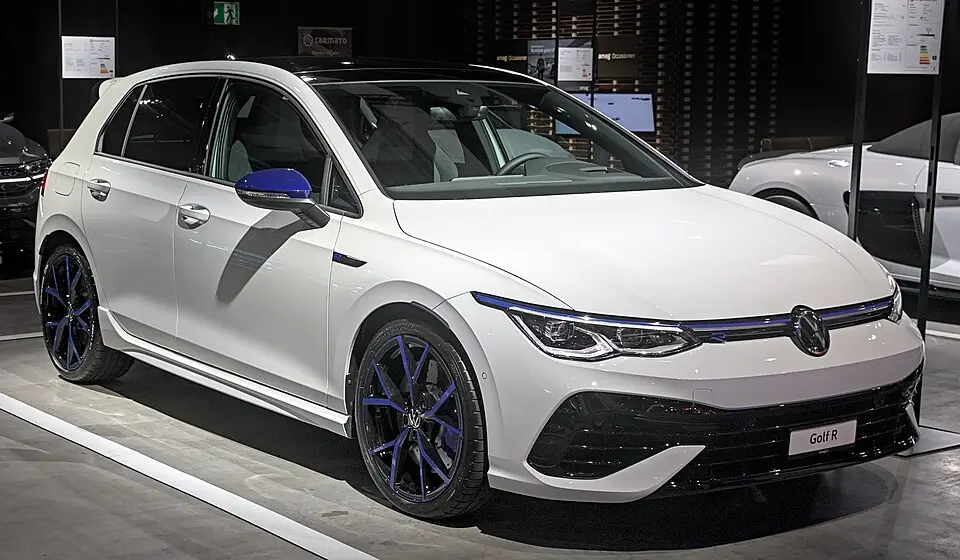
Volkswagen Golf R
Mk8, 2020–present
316 hp (235 kW) 420 Nm 4.7 s
Car
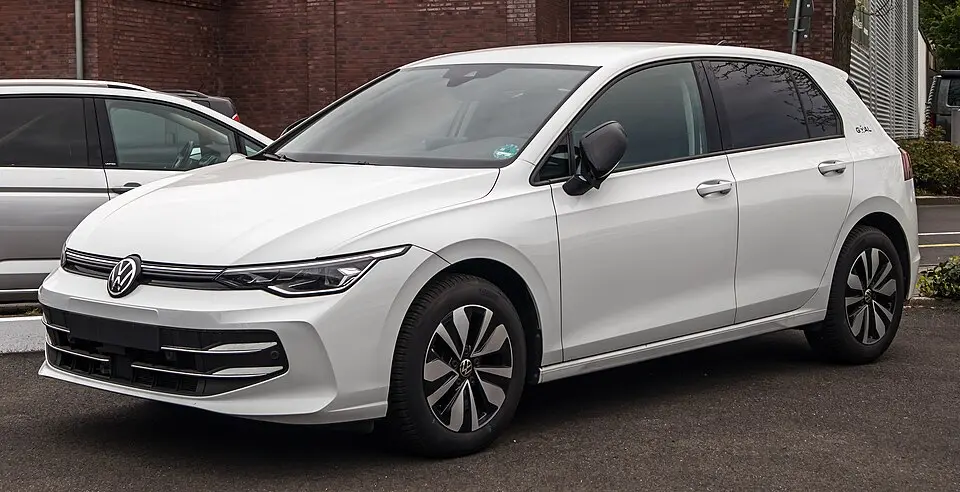
The Volkswagen Golf is a car built by Volkswagen Group. European buyers can choose from 8 engine and power combinations, from 114 hp (85 kW) to 329 hp (245 kW). US versions are rated at 25–28 mpg combined. It measures 4,284 mm (169 in) long on a 2,619 mm wheelbase.
| Engine | Fuel | Power | Economy | CO₂ | Weight |
|---|---|---|---|---|---|
| 1.5 litre | Petrol | 114 hp (85 kW) | 5.3 l/100 km (44 mpg) | 121 g/km | 1,304–1,588 kg |
| 2.0 litre | Diesel | 114 hp (85 kW) | 4.4 l/100 km (53 mpg) | 116 g/km | 1,367–1,535 kg |
| 1.5 litre | Petrol | 148 hp (110 kW) | 5.4 l/100 km (44 mpg) | 123 g/km | 1,341–1,701 kg |
| 2.0 litre | Diesel | 148 hp (110 kW) | 4.7 l/100 km (50 mpg) | 123 g/km | 1,411–1,671 kg |
| 1.5 litre | Plug-in hybrid | 174 hp (130 kW) | 0.4 l/100 km (588 mpg) | 9 g/km | 1,644–1,723 kg |
| 2.0 litre | Petrol | 261 hp (195 kW) | 7.2 l/100 km (33 mpg) | 162 g/km | 1,454–1,544 kg |
| 2.0 litre | Petrol | 296 hp (221 kW) | 7.5 l/100 km (31 mpg) | 170 g/km | 1,459–1,549 kg |
| 2.0 litre | Petrol | 329 hp (245 kW) | 8.2 l/100 km (29 mpg) | 186 g/km | 1,548–1,773 kg |
| Powertrain | Drive | Combined | Electric range |
|---|---|---|---|
| 2.0 litre 4-cylinder, petrol | All-Wheel Drive | 25–26 mpg | — |
| 2.0 litre 4-cylinder, petrol | Front-Wheel Drive | 27–28 mpg | — |
8th generation, 2019–2024: 38 versions (hatchback, wagon), from least to most powerful. Figures are manufacturer claims and vary by market.
| Version | Engine | Power | Torque | 0–100 km/h | Top speed | Gearbox | Drive |
|---|---|---|---|---|---|---|---|
| 1.0 MT Hatchback 5 doors | 1.0 litre gasoline | 89 hp (66 kW) | 175 Nm | 11.9 s | 188 km/h | Manual, 5-speed | Front wheel drive |
| 1.0 AMT wagon 5 doors | 1.0 litre gasoline | 109 hp (81 kW) | 200 Nm | 10.6 s | 202 km/h | automated manual, 7-speed | Front wheel drive |
| 1.0 AMT Hatchback 5 doors | 1.0 litre gasoline | 109 hp (81 kW) | 200 Nm | 10.2 s | 202 km/h | automated manual, 7-speed | Front wheel drive |
| 1.0 MT wagon 5 doors | 1.0 litre gasoline | 109 hp (81 kW) | 200 Nm | 10.5 s | 202 km/h | Manual, 6-speed | Front wheel drive |
| 1.0 MT Hatchback 5 doors | 1.0 litre gasoline | 109 hp (81 kW) | 200 Nm | 10.2 s | 202 km/h | Manual, 6-speed | Front wheel drive |
| 2.0 AMT wagon 5 doors | 2.0 litre diesel | 114 hp (85 kW) | 300 Nm | 10.7 s | 202 km/h | automated manual, 7-speed | Front wheel drive |
| 2.0 MT wagon 5 doors | 2.0 litre diesel | 114 hp (85 kW) | 300 Nm | 10.5 s | 202 km/h | Manual, 6-speed | Front wheel drive |
| 2.0 MT Hatchback 5 doors | 2.0 litre diesel | 114 hp (85 kW) | 300 Nm | 10.2 s | 202 km/h | Manual, 6-speed | Front wheel drive |
| 1.5 AMT wagon 5 doors | 1.5 litre gas balloon equipment | 129 hp (96 kW) | 200 Nm | 9.8 s | 211 km/h | automated manual, 7-speed | Front wheel drive |
| 1.5 MT wagon 5 doors | 1.5 litre gasoline | 129 hp (96 kW) | 200 Nm | 9.4 s | 214 km/h | Manual, 6-speed | Front wheel drive |
| 1.4 AMT Hatchback 5 doors | 1.4 litre gasoline | 148 hp (110 kW) | 250 Nm | 8.2 s | 200 km/h | automated manual, 7-speed | Front wheel drive |
| 1.4 AT Hatchback 5 doors | 1.4 litre gasoline | 148 hp (110 kW) | 250 Nm | 8.5 s | 216 km/h | Automatic, 8-speed | Front wheel drive |
| 1.5 AMT wagon 5 doors | 1.5 litre gasoline | 148 hp (110 kW) | 250 Nm | 8.7 s | 224 km/h | automated manual, 7-speed | Front wheel drive |
| 1.5 MT wagon 5 doors | 1.5 litre gasoline | 148 hp (110 kW) | 250 Nm | 8.7 s | 224 km/h | Manual, 6-speed | Front wheel drive |
| 2.0 AMT wagon 5 doors | 2.0 litre diesel | 148 hp (110 kW) | 360 Nm | 8.7 s | 223 km/h | automated manual, 7-speed | Front wheel drive |
| 2.0 AMT Hatchback 5 doors | 2.0 litre diesel | 148 hp (110 kW) | 360 Nm | 8.8 s | 223 km/h | automated manual, 7-speed | Front wheel drive |
| 2.0 MT wagon 5 doors | 2.0 litre diesel | 148 hp (110 kW) | 340 Nm | 9.1 s | 223 km/h | Manual, 6-speed | Front wheel drive |
| 2.0 AMT wagon 5 doors | 2.0 litre gasoline | 188 hp (140 kW) | 320 Nm | 7.3 s | 238 km/h | automated manual, 7-speed | Front wheel drive |
| 2.0 AMT 4WD wagon 5 doors | 2.0 litre gasoline | 188 hp (140 kW) | 320 Nm | 7.2 s | 234 km/h | automated manual, 7-speed | All wheel drive |
| 2.0 AMT 4WD wagon 5 doors | 2.0 litre diesel | 197 hp (147 kW) | 400 Nm | 7.1 s | 229 km/h | automated manual, 7-speed | All wheel drive |
| 2.0 AMT AWD wagon 5 doors | 2.0 litre diesel | 197 hp (147 kW) | 400 Nm | 7.1 s | 229 km/h | automated manual, 7-speed | All wheel drive |
| 1.4 AMT Hatchback 5 doors | — | — | — | — | — | — | — |
| 1.4 AMT Hatchback 5 doors | 1.4 litre hybrid | — | 350 Nm | 7.4 s | 220 km/h | automated manual, 6-speed | Front wheel drive |
| 1.4 AMT Hatchback 5 doors | 1.4 litre hybrid | — | 400 Nm | 6.7 s | 225 km/h | automated manual, 6-speed | Front wheel drive |
| 1.4 AT Hatchback 5 doors | — | — | — | — | — | — | — |
| 1.4 l,, gasoline, MT, front drive Hatchback 5 doors | — | — | — | — | — | — | — |
| 1.4 l,, gasoline, robot, front drive Hatchback 5 doors | — | — | — | — | — | — | — |
| 1.5 AMT Hatchback 5 doors | 1.5 litre gasoline | — | 200 Nm | 9.4 s | 213 km/h | automated manual, 7-speed | Front wheel drive |
| 1.5 AMT wagon 5 doors | — | — | — | — | — | — | — |
| 1.5 AMT Hatchback 5 doors | 1.5 litre gasoline | — | 250 Nm | 8.5 s | 224 km/h | automated manual, 7-speed | Front wheel drive |
| 1.5 MT Hatchback 5 doors | 1.5 litre gasoline | — | 200 Nm | 9.2 s | 214 km/h | Manual, 6-speed | Front wheel drive |
| 1.5 MT Hatchback 5 doors | 1.5 litre gasoline | — | 250 Nm | 8.5 s | 224 km/h | Manual, 6-speed | Front wheel drive |
| 1.6 l,, gasoline, Automatic transmission, front drive Hatchback 5 doors | — | — | — | — | — | — | — |
| 1.6 l,, gasoline, MT, front drive Hatchback 5 doors | — | — | — | — | — | — | — |
| 2.0 AMT Hatchback 5 doors | 2.0 litre diesel | — | 300 Nm | 10.4 s | 202 km/h | automated manual, 7-speed | Front wheel drive |
| 2.0 AMT Hatchback 5 doors | 2.0 litre gasoline | — | 320 Nm | 6.7 s | 234 km/h | automated manual, 7-speed | All wheel drive |
| 2.0 AMT Hatchback 5 doors | 2.0 litre diesel | — | 400 Nm | 7.1 s | 245 km/h | automated manual, 7-speed | Front wheel drive |
| 2.0 MT Hatchback 5 doors | 2.0 litre diesel | — | 340 Nm | 8.8 s | 223 km/h | Manual, 6-speed | Front wheel drive |
Full Volkswagen Golf dimensions, with a size comparison to rivals →
| Length | 4,284 mm | 169 in |
|---|---|---|
| Width | 1,789 mm | 70 in |
| Height | 1,491 mm | 59 in |
| Wheelbase | 2,619 mm | 103 in |
| Ground clearance | 142 mm | 6 in |
| Kerb weight | 1,255–1,624 kg | 2,767–3,580 lb |
| Boot space | 381–1,237 litres | 13–44 cu ft |
| Seats | 5 | |
| Fuel tank | 45 litres | 12 US gal |
| Market | Sold as | 2025 sales rank |
|---|---|---|
| Europe | Volkswagen Golf | #9 |
Ranked by 2025 new-car registrations in the EU, Norway and Iceland (EEA provisional data).
Every version of each generation, with power, torque and performance figures. See the Volkswagen Golf generations table.
The most powerful Volkswagen Golf sold in Europe produces 329 hp (245 kW) from a 2-litre petrol engine. The least powerful version makes 114 hp (85 kW).
Between 175 and 400 Nm (129–295 lb-ft) for the 8th generation, depending on the engine.
The quickest version takes 6.7 seconds from 0 to 100 km/h (about 6.4 s to 60 mph); the slowest takes 11.9 seconds.
Up to 245 km/h (152 mph) for the fastest version; the slowest tops out at 188 km/h (117 mph).
It is 4,284 mm (169 in) long, 1,789 mm (70 in) wide and 1,491 mm (59 in) tall. A typical kerb weight is 1,255 kg (2,767 lb).
The most economical European version uses 4.4 l/100 km on the WLTP cycle. In the US, EPA combined ratings range from 25–28 mpg.
It ranked number 9 in Europe in 2025.
The fastest Volkswagen Golf variants have their own pages, with full specs and head-to-heads.
Sources: EEA CO₂ monitoring 2025 (engines), RDW open data and manufacturer data (dimensions, versions), FuelEconomy.gov (US ratings), Wikidata Q247, Wikipedia. Figures are typical values and vary by trim and year. Data last updated .