Golf GTI vs Golf R: which should you buy? (Mk8 and Mk8.5)
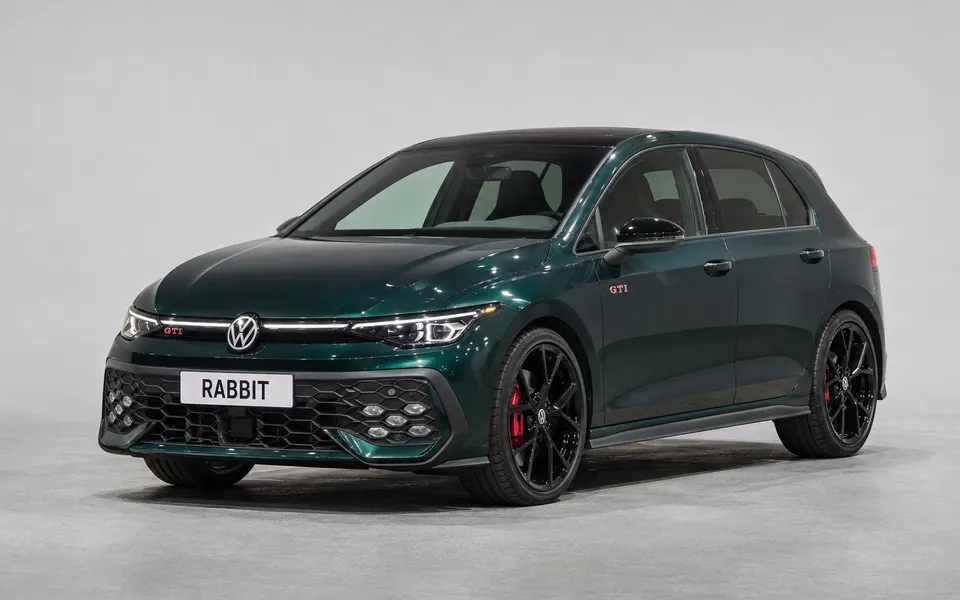
The Golf GTI and the Golf R are the same car to look at and almost the same to sit in, so the choice is really one question: is all-wheel drive and about 70 hp worth the extra money and the extra things to go wrong? This guide answers the questions buyers keep asking, using reviews, used-buying guides and owner forums, for the Mk8 (2020 on) and the Mk8.5 facelift (2024 on).
The short answer
- Buy the GTI if you want the lighter, cheaper, more playful car for daily driving, and you are fine with front-wheel drive.
- Buy the R if you want the fastest Golf, all-weather traction, or a car that feels settled at speed, and the price gap does not hurt.
- Buy neither new if budget matters: used Mk8.5 Rs have held their value well, but a two-year-old GTI is the better value.
How different are they on paper?
| Golf GTI Mk8.5 | Golf R Mk8.5 | |
|---|---|---|
| Engine | 2.0-litre turbo four | 2.0-litre turbo four, bigger turbo and intercooler |
| Power | 261 hp (195 kW) | 328 hp (245 kW) |
| Torque | 370 Nm (273 lb-ft) | 420 Nm (310 lb-ft) |
| Drive | Front-wheel drive | All-wheel drive, torque-vectoring rear axle |
| Gearbox | 7-speed DSG | 7-speed DSG |
| 0 to 62 mph | 5.9 s | 4.6 s (4.8 s Variant) |
| Top speed | 155 mph, limited | 155 mph, or 168 mph with R-Performance pack |
| Kerb weight | Roughly 1,400 kg | 1,548 kg |
| Body styles | Hatchback | Hatchback and Variant estate |
The pre-facelift Mk8 was closer on paper: 242 hp (180 kW) for the GTI against 316 hp (235 kW) for the R. The facelift added about 20 hp to the GTI and 13 hp to the R, which moved both up a rung. Figures are from PistonHeads and its GTI launch report; the GTI weight is approximate, as sources differ. Compare every number on our GTI Mk8 vs R Mk8 page.
Is the R really that much quicker?
Yes, and more so off the line. PistonHeads puts the 8.5 R a full second ahead of the GTI to 62 mph, and Edmunds' track test in the US had a bigger gap, 4.5 seconds to 60 mph for the R against 6.1 for the GTI. All-wheel drive is the reason: the R launches cleanly, while a front-wheel-drive GTI spends power on wheelspin in the wet. On a dry back road the real-world gap is smaller than the numbers suggest.
Which is more fun to drive?
This is where reviewers split. The GTI is lighter and more playful, and the R is more capable and more secure. Motor1 described the R as faster and easier to drive fast, at the cost of a little of the GTI's agility, and that verdict has carried into the Mk8. The Truth About Cars says the R is the one for track days or a great driving road, but would still pick the GTI for ordinary road driving. Hooniverse found the handling gap much smaller on the road than on paper, and said it would spend its own money on the R.
PistonHeads' view of the 8.5 R is that it is the best Golf R to drive but not the most exciting, because the chassis easily handles the power. The R-Performance pack (about £2,000 in the UK) adds Drift and Special driving modes and the higher top speed, and the extra-cost DCC adaptive dampers (around £700) help the R's firm low-speed ride.
What about ride comfort?
The R sits 20 mm lower and its standard passive dampers are firm, with a knobbly low-speed ride on poor roads, according to PistonHeads. The GTI is generally the more comfortable car for daily use, although top-spec GTIs with adaptive dampers close the gap. If you do a lot of potholed commuting, drive both before deciding.
How much more does the R cost?
In the UK the Mk8.5 GTI went on sale at £38,900 in June 2024 and the R launched at £44,535, a gap of about £5,600. By May 2026 a new R was just under £47,000 and used 2024 Rs started near £36,000. In the US, iSeeCars lists new GTIs at about $33,300 to $42,900 and Rs at about $49,200 to $55,000 across model years, so the gap there is wider. Motorpoint estimates the monthly difference on UK finance at only about £60, which is why many buyers stretch to the R. Prices move quickly, so check current listings.
Running costs: fuel, tyres, servicing and insurance
- Fuel. PistonHeads lists the R at 34.9 mpg combined (UK) with a 55-litre tank, and says 40 mpg is easy on a run. The GTI has a 50-litre tank and is a few mpg better in most comparisons. Real-world mid-30s for the R and high 30s for the GTI is a fair expectation.
- Servicing. Both use a DSG, which needs its own fluid service. The R also has an all-wheel-drive driveline with a rear coupling and differential that need fluid changes. Intervals quoted by VW, parts sellers and tuners disagree, so follow the handbook for your car and ask for the service history. VW UK offered a two-service plan on the R for about £420.
- Tyres and brakes. The R has bigger brakes (357 mm front) and wider rubber, so expect a higher bill when they wear.
- Insurance. Both sit in high insurance groups, with the R higher. I could not find reliable quotes for the Mk8.5, so get one for your age and postcode before you commit. Motor1 noted in 2017 that insurers saw the R as less of a theft target than the GTI, which may or may not still hold.
Which is more reliable?
The core hardware is shared, so the engine and DSG are not what separates them. The difference is in the electronics and in the R's extra drivetrain parts.
PistonHeads' May 2026 buying guide lists a long run of Mk8.5 R complaints, mostly electrical: rear windows and central locking acting up, glitchy lights, a flaky VW app, and a fault where the shift paddles stop working and the gearbox drops out of manual mode. It traces the paddle fault to the R's capacitive steering-wheel buttons, which the R alone kept, and says the fix was slow to arrive, with some owners rejecting their cars. The guide points to a 91-page "8.5 R Gremlins" thread on the VW Owners' Club forum, and a 2025 owner on VWVortex reported infotainment audio cutouts that dealer software updates did not cure.
The GTI shares the MIB4 infotainment and touch-slider climate controls, so it can have similar software quirks, but it moved back to physical steering-wheel buttons and has fewer drivetrain parts to fail. Early Mk8s of both types (2020 to 2021) had a bad reputation for freezing and black screens, which later software mostly fixed, according to one buyer's guide. The Mk8.5 improved the screen (now 12.9 inches), added backlit sliders and better software, but physical buttons for climate and volume never came back.
Practical advice: for either car, buy with a full service history, check that all software updates have been applied, and test the paddles, screen, windows and locking on the drive. On the R, ask when the all-wheel-drive and DSG fluids were last changed.
Is the GTI good enough in snow?
Yes, with winter tyres. The R's all-wheel drive is a real advantage on ice: Motor1 described the R on ice as more than just an all-wheel-drive GTI. But most sources, from Autotrader to owner forums, agree that tyres matter more than driven wheels. A GTI on winter rubber will beat an R on worn summers.
Can I tune a GTI to R power?
On the previous generation, tuners did exactly that. Mountune's Stage 1 on the Mk7 GTI reportedly matched the R's output, and its bigger package fitted the R's IS38 turbo for about 380 hp (283 kW) according to Autoblog. For the Mk8, Wayside Performance lists a Stage 1 R at roughly 390 to 400 hp (291 to 298 kW), and I found far less published data on the equivalent GTI. A tune adds power but not all-wheel drive, so a tuned GTI is still a front-wheel-drive car and warranty and insurance both need checking. If you want R performance and R traction, buy the R.
What about the Clubsport, or other rivals?
The Mk8.5 GTI Clubsport sits between the two with 296 hp (221 kW) and front-wheel drive, so it is the answer if you want more than a GTI without the R's weight and cost. Among rivals, the Ford Focus ST has been the GTI's closest front-wheel-drive competitor, the Honda Civic Type R sits above both on price, and the Cupra Leon 333, which shares the R's mechanicals, comes with a five-year warranty against VW's three, as PistonHeads points out.
What is the difference inside and out?
Very little. The GTI has red accents, plaid seats and a honeycomb grille. The R has blue highlights, microsuede sports seats, an R-specific driver's display and four exhaust tips against the GTI's two. Both have the same 12.9-inch touchscreen on the Mk8.5. The R loses a little boot space to the rear driveline, and it is the only one of the pair you can get as an estate. The GTI is the rarer sight on the road, which PistonHeads says gives it a little more "specialness".
Which should you buy?
| If you... | Pick |
|---|---|
| Want the cheapest way into a Mk8.5 Golf | GTI |
| Want a lighter, more playful car for daily use | GTI |
| Want the best traction in wet or snow | R |
| Want a Golf estate | R Variant |
| Want the quickest, most secure car on a back road | R |
| Want to avoid the R's drivetrain servicing and software problems | GTI |
| Want strong resale value | R, according to used-price data in PistonHeads' guide |
| Want a front-drive car with a bit more power than the GTI | GTI Clubsport |
Sources
Note: most search results were reviews and buying guides rather than forum threads. The forum evidence above comes from the threads and guides linked in the text, and I have not quoted owners beyond what those sources report.
- PistonHeads: VW Golf R (Mk8.5) used buying guide, May 2026
- PistonHeads: New VW Golf GTI goes on sale in UK, June 2024
- Motor1: Volkswagen Golf GTI vs R, which should you buy?
- Hooniverse: 2025 VW GTI vs 2025 Golf R comparo
- The Truth About Cars: 2025 Volkswagen Golf R review
- Motorpoint: Golf R vs Golf GTI
- Edmunds: 2025 Volkswagen Golf R track tested
- iSeeCars: Golf GTI vs Golf R
- VWVortex: Golf Mk 8.5 infotainment audio cutout issues
- Wikipedia: Volkswagen Golf Mk8
- Autoblog: Mountune52 Golf GTI tune
- Wayside Performance: Mk8 Golf R tuning guide
- CarSpecHub specs: Golf GTI Mk8 and Golf R Mk8
Prices, power and weight vary by market, year and source. Spotted an error? Tell us.
Frequently asked questions
What is the difference between the Golf GTI and the Golf R?
Both use a 2.0-litre turbo four and a seven-speed DSG. The GTI is front-wheel drive with 261 hp (195 kW) in Mk8.5 form. The R adds all-wheel drive, a torque-vectoring rear axle and 328 hp (245 kW), and it is about a second quicker to 62 mph (4.6 s against 5.9 s).
Is the Golf R worth the extra money over the GTI?
If you drive hard, want year-round traction or want the quickest Golf, yes. If you mostly commute and want the lighter, cheaper, simpler car, the GTI gives most of the character for much less. In the UK the Mk8.5 R launched about £5,600 above the GTI, and the gap is larger in the US.
Is the Golf R reliable?
The engine and gearbox are shared with the GTI and are generally sound. The complaints are electrical and software: PistonHeads' 2026 buying guide lists steering-wheel button and paddle faults, lighting glitches and app problems on the Mk8.5 R, and owners have a 91-page forum thread about them.
Does the Golf R cost much more to run than the GTI?
A little more. It is heavier, officially returns about 35 mpg combined, has a larger tank, wider tyres and extra fluids to change (all-wheel-drive driveline as well as the DSG). It is not a different class of cost, but budget more for tyres, brakes and servicing.
Can a GTI be made as fast as an R?
On the previous generation, yes: tuners fitted the R's larger turbo to the GTI for around 380 hp (283 kW). On the Mk8 platform the R also gains from its all-wheel drive, so a tuned GTI is quicker on paper but harder to put on the road. Treat tuner claims with caution and check what any used car has had done.
Which is better in snow?
The R, thanks to all-wheel drive. A front-wheel-drive GTI on proper winter tyres is still very capable, and tyres matter more than the drivetrain.
Do the GTI and R both come with a manual gearbox?
Not any more. The Mk8.5 facelift dropped the manual from the GTI in the UK and the US, and the R is DSG only.